How to prep for a major donor call in under 10 minutes
Major donor call preparation takes as long as it does because the information is scattered, not because you don't know what you're looking for.
The giving history lives in one screen. The last interaction notes are somewhere in the activity log. The event attendance might be in a different module. The connection to your board is in your head. Assembling a complete picture takes time that most days simply isn't available, so preparation gets compressed or skipped, and the call starts from a slightly less informed place than it should.
The framework below isn't about doing something different. It's about making what you already know faster to access and harder to forget.
Step 1: Relationship snapshot (2 minutes)
The first question isn't about giving, it's about the relationship itself. How long has this donor been in your world? Who brought them in, and through what connection? Who else at your organization knows them personally?
The introduction story matters as much as the giving history in many major gift conversations. Knowing that a donor was brought in through a board member who has since left changes how you talk about institutional continuity. Knowing that two colleagues have independent relationships with this person changes how you think about cultivation.
Step 2: Giving history and pattern (2 minutes)
Not just the most recent gift, but the trend. Has giving grown, held steady, or shifted over the past three years? Has the designation changed? Has anything about the timing changed?
Pattern shifts are often more informative than the giving itself. A donor who moves from unrestricted to restricted giving is telling you something about where their engagement is most alive right now. That's not a problem to manage it's a conversation to have.
Step 3: Last meaningful touchpoint (2 minutes)
The last contact date in a CRM often reflects the last email blast a donor received. What you actually want is the last real exchange a call, a meeting, a genuine conversation.
Read those notes before every significant call. What did they share? What did you commit to? If there's an open loop from that conversation, acknowledging it at the start of this one is one of the simplest things a gift officer can do to demonstrate that the relationship is real and not transactional.
Step 4: Objective and ask clarity (2 minutes)
Every significant donor conversation works better when you're clear about what you're trying to accomplish before it starts. Not a vague goal like "check in" a specific outcome. "Understand where they are on the naming conversation." "Confirm interest in the spring leadership event." "Learn what's changed since our last talk."
If this conversation involves an ask, knowing the amount, the designation, and the timing before you dial removes the hesitation that donors can feel on the other end of the line. And knowing the likely objections, and how you'd respond to the means you're not improvising at the moment that matters most.
Step 5: Your opening line (1 minute)
Writing the first sentence word-for-word before a call might feel like over-preparation. In practice, it's the thing that settles the energy of the conversation. Something personal and specific, a reference to what they mentioned last time, something you genuinely noticed about their work or their organization, lands differently than a generic opener.
You'll go off-script within thirty seconds. Having the words ready means you don't start by fumbling.
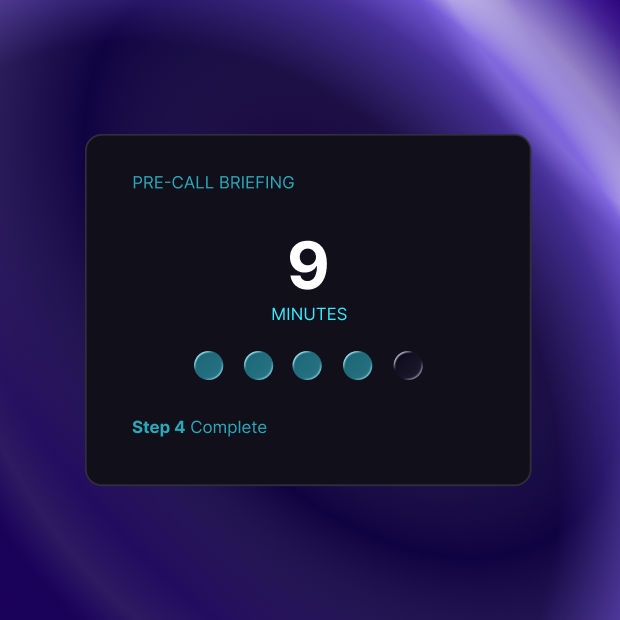
The 9-minute total
Relationship snapshot, giving history, last touchpoint, objective, and opening line. Nine minutes, assuming the information is easy to find.
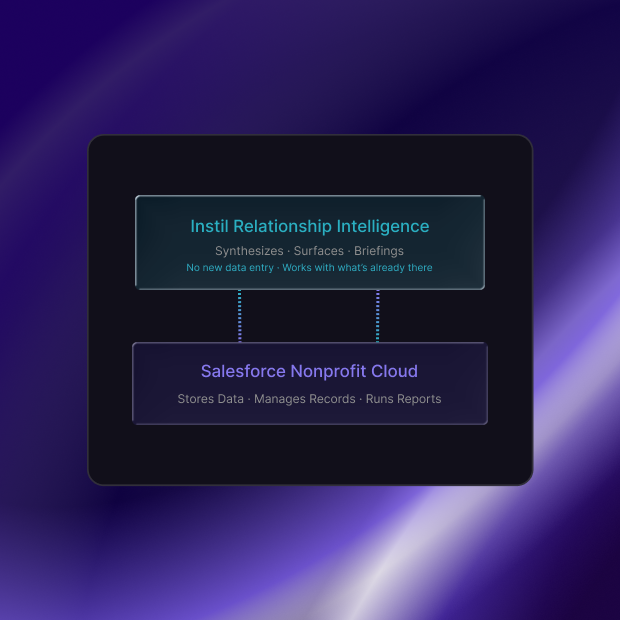
The variable is that last assumption. When the data lives in disconnected screens, and the qualitative context lives in email threads or memory, preparation takes 45 minutes and gets shortcut. When it's assembled for you, it takes nine and actually gets done before every call.
That's what relationship intelligence changes. Not the framework, but the time required to run it. Instil generates this briefing automatically from your data.
See how Instil generates it automatically in a 20-minute demo.