AI donor briefings: what they are and how major gifts teams are using them
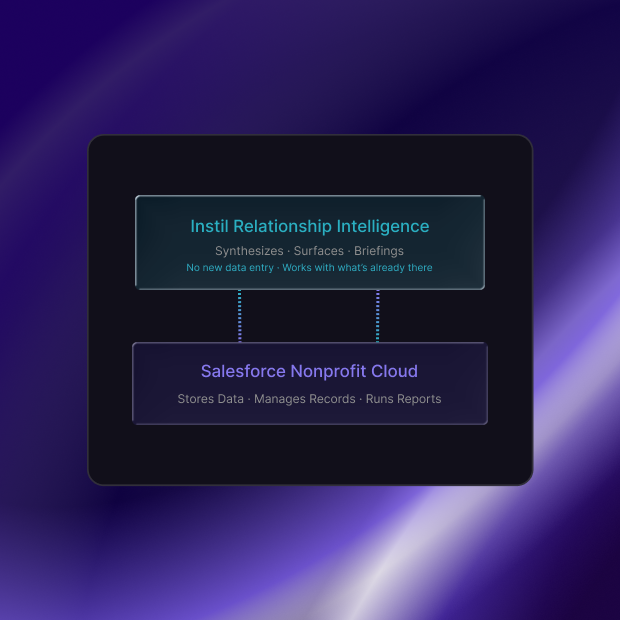
An AI donor briefing is a document generated by AI that summarizes what a gift officer needs to know about a donor before a call or meeting, drawn entirely from data that already exists in the CRM.
The idea isn't complicated. What makes it significant is the gap it closes.
The preparation problem it addresses
Major gift officers are not short on context about their donors. The challenge is that the context is distributed: giving history in one record, interaction notes in another, event attendance in a third, and qualitative relationship knowledge in memory. Pulling it together before a call takes time that isn't always available.
When preparation is compressed, conversations start from a slightly less informed place. When it's skipped entirely which happens, especially for Tier 2 and Tier 3 donors the relationship feels a little more transactional than it should on both sides.
AI donor briefings compress the preparation without compressing the quality. The synthesis happens automatically. What arrives in front of the gift officer before the call is the picture they would have assembled manually, without the 30 to 45 minutes it would have taken to build it.
What a useful briefing actually covers
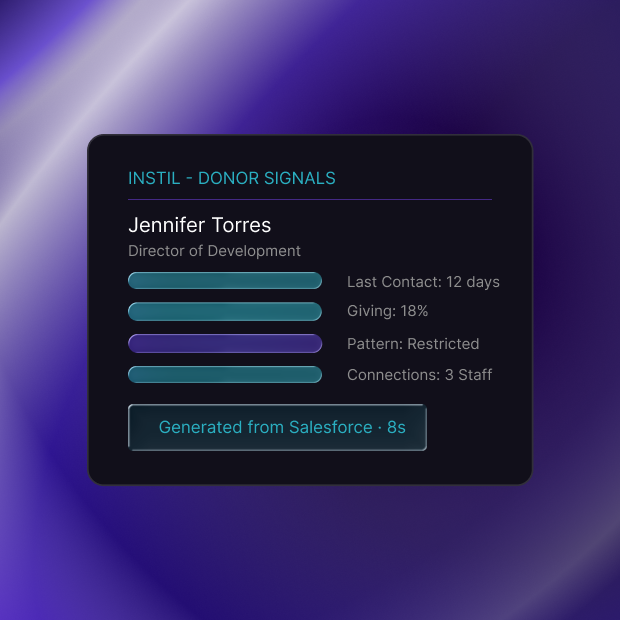
The most useful AI briefings for major gifts work go beyond giving history. They include:
- Relationship origin: how long in the database, who the introduction came through, and what the mission connection is
- Giving history and trend: lifetime giving, most recent gift, whether the pattern is strengthening or softening
- Last personal interaction: date, what was discussed, any commitments made that haven't yet been logged as completed
- Behavioral engagement: event attendance patterns, communications responses, and any notable recent changes
- Relationship network: who else at the organization has a personal connection to this donor
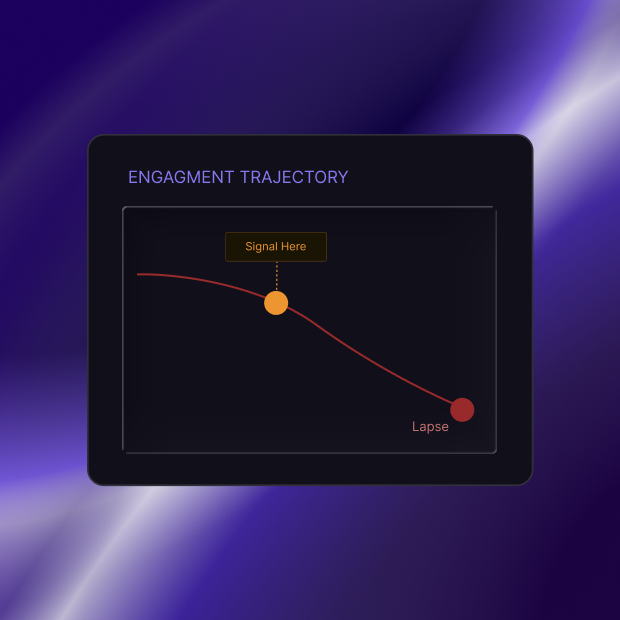
- Signals worth noting: recency gaps, pattern shifts, or engagement changes that might shape the conversation
A briefing that covers only giving history is a report. A briefing that covers all of the above is a picture of the relationship.
The data privacy question
This is a legitimate concern, and major gifts professionals are right to ask it. When donor data is processed by an AI system, where does it go? Is it being used to train a model? Who has access to it?
The answer depends entirely on the tool. General-purpose AI products, including free tiers of widely used platforms, often use the data sent through them to improve their models. Donor records, interaction notes, and relationship details submitted to these tools may be retained in ways that your privacy policy doesn't authorize.
Purpose-built platforms with explicit no-training agreements are a different category. Instil's AI layer is built on Anthropic's commercial API under a no-training agreement, meaning your donor data is processed to generate the briefing and is not retained for model improvement. That commitment is contractual, not just a stated policy.
What changes and what doesn't
An AI briefing surfaces context. It doesn't change the relationship, the conversation, or the judgment that major gifts work requires.
What it changes is the quality of preparation that's achievable at scale. A gift officer preparing for five calls in a day with a full briefing for each is in a meaningfully different position than one preparing for the same five calls with a quick scan of recent giving. The relationship skill is the same. The context going into each conversation is not.
The gift officers reporting the strongest outcomes with AI briefings tend to describe the same thing: not that the tool replaces anything they do, but that it makes the work they already do better informed and less dependent on what they happen to remember that day.
See what an AI donor briefing looks like. We run 20-minute demos for teams on Salesforce and Blackbaud.