How to manage a major gifts portfolio of 200+ donors without losing the thread
Managing a major gifts portfolio of 200 or more donors is a genuine capacity challenge. Not a motivation challenge, not a skill challenge, a capacity challenge.
With 220 working days in a year and 200 relationships to maintain, the math allows roughly one meaningful touchpoint per donor per year before every other demand on a gift officer's time is accounted for. In practice, events, appeals, board work, internal coordination, and administrative tasks compress that further.
The teams that do this well aren't doing it by working harder. They're doing it with systems that make the most important relationships visible and the most urgent signals findable without a manual audit of 200 records.
Tiering the portfolio
Not all 200 relationships are at the same stage, and treating them as though they are spreads relationship energy too thin to be effective anywhere.
A working tiering system typically looks like this:
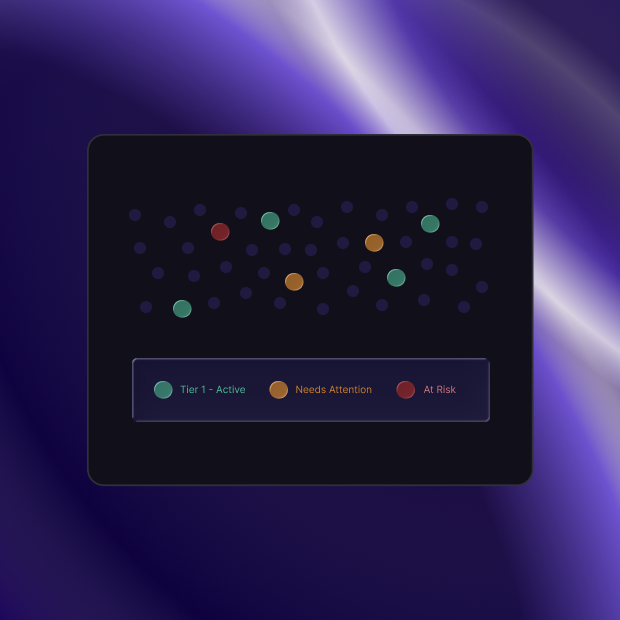
Tier 1: Active cultivation (20–30 donors)
Highest-capacity, highest-priority relationships in active cultivation. Personal outreach every four to six weeks, genuine ongoing relationship investment, and a clear near-term objective for each.
Tier 2: Stewardship cadence (60–80 donors)
Committed donors who are stable and valued, not currently in active cultivation for a significant upgrade. Personal contact every six to eight weeks, authentic stewardship between appeals, attentiveness to signals that something might be shifting.
Tier 3: Portfolio monitoring (remaining donors)
Earlier-stage relationships or donors at lower capacity tiers. A minimum quarterly touchpoint and consistent monitoring for movement, either the engagement patterns that suggest readiness for Tier 2 attention, or the early warning signs of drift.
The tier system only works if Tier 3 is actually monitored. The most common failure point isn't in Tier 1; it's in the donors whose relationships have been quietly softening for a year while attention was concentrated at the top of the portfolio.
A weekly rhythm instead of a quarterly one
Quarterly portfolio reviews are a useful practice. They're not sufficient on their own for catching relationship movement in time to do something about it.
What changes the retention picture is a brief weekly check on three questions: Who hasn't had personal contact in 60 or more days? Is there anyone showing a giving or engagement shift I should know about? Has anything changed in the lives or circumstances of donors I'm cultivating this month?
These three questions, with the right saved views in Salesforce or Blackbaud, take ten minutes to answer. They turn portfolio management from a quarterly catch-up into a continuous awareness practice, which is what the relationship actually requires.
Protecting the time for relationship work
The risk with any systematic portfolio management approach is that the system itself becomes the work. Reports and reviews, and segmentation exercises consume time that should go to conversations.
The goal of the system is to make the relationship work faster and better informed, not to add a layer of administrative process on top of it. Impact updates, event invitations, and stewardship acknowledgments can be personalized and batched. What can't be batched is the call where you listen more than you talk.
The cleaner the system, the more time remains for that.
Knowing who is warming and who is cooling
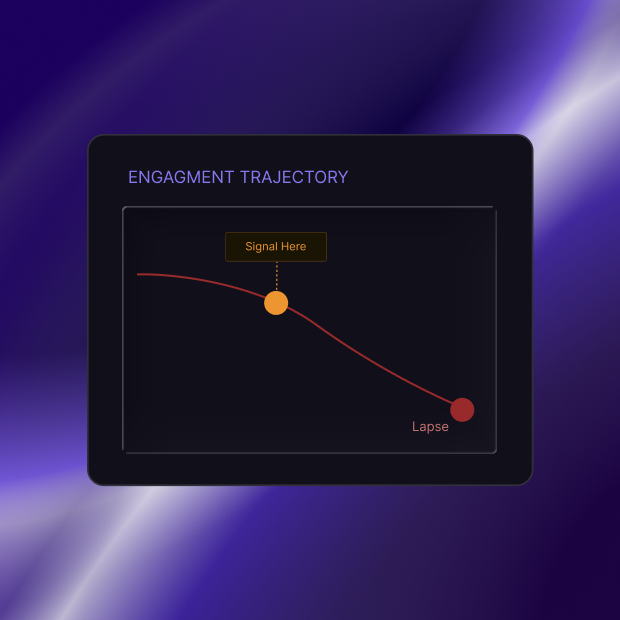
The most valuable ongoing awareness in portfolio management is a read on directionality, not just where each relationship stands, but which way it's moving.
A donor showing increased engagement, faster email responses, proactive contact, and stronger event attendance is warming, and the relationship may be ready for a different kind of conversation. A donor whose responses are slower, giving has softened slightly, and event attendance has narrowed is cooling, and the relationship may need attention before that trajectory becomes harder to reverse.
Both of those conversations are good ones to have. The difference is having them while the relationship is still warm versus reconstructing them after a lapse.
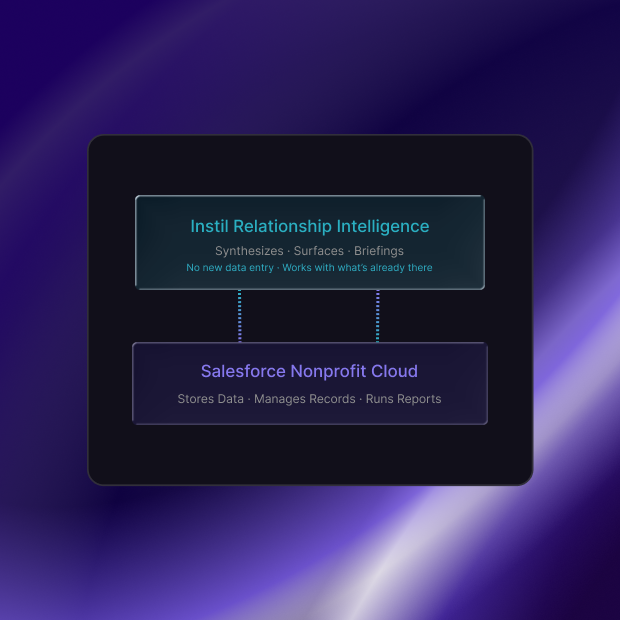
Relationship intelligence platforms like Instil surface this directionality automatically from your CRM data, so the gift officer knows going into a call what the pattern has been, not just what the current status is.
Want to see how Instil surfaces portfolio signals automatically for Salesforce or Blackbaud? We show major gifts teams in 20 minutes.