Why your LYBUNT report isn't enough and what to run alongside it
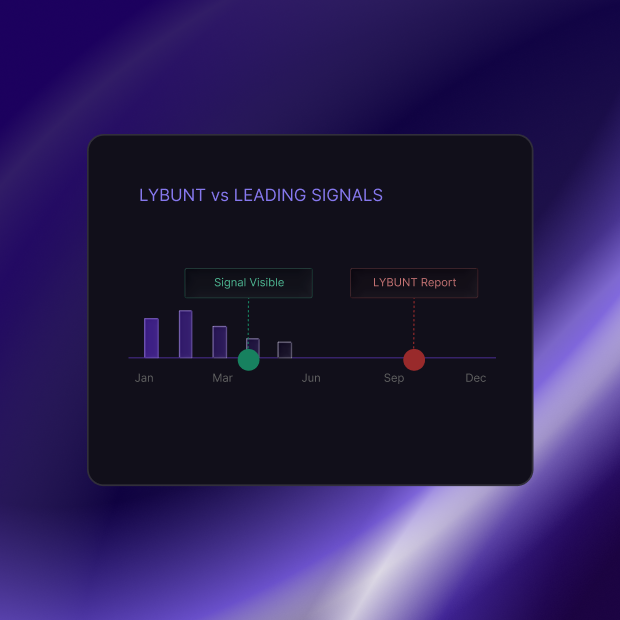
LYBUNT is a good report. It does exactly what it was designed to do: identify donors who gave last year but haven't yet given this year, so your team can prioritize outreach and reactivation.
The limitation isn't with the report itself. It's with what any lagging indicator can tell you, which is what already happened, not what's happening now.
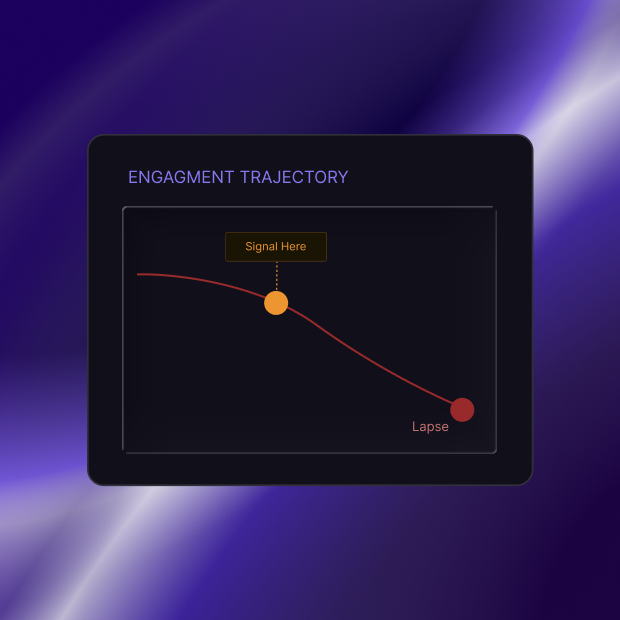
By the time a major donor appears on a LYBUNT list, the relationship has typically been softening for months. The signal was there. It just wasn't in a form that surfaced it as a risk before it became a lapse.
What LYBUNT is built to measure
LYBUNT measures outcomes. It's a record of what happened, which is genuinely valuable for understanding your portfolio and driving reactivation conversations.
For major gifts specifically, though, the goal is to have the retention conversation long before anyone appears on a lapse report. The donors most worth protecting are the ones whose relationships are currently healthy, and where a single overlooked signal might be the difference between continued engagement and a quiet exit.
That's not a failure of LYBUNT as a tool. It's simply asking something of a report that no report built around historical giving data can provide: early warning.
Four leading indicators worth tracking alongside it
Recency by portfolio tier
A recency filter across your major donor portfolio, sorted by last personal interaction date, not last email, quickly surfaces relationships that have drifted further than they should have. Sixty days without a personal touchpoint on a Tier 1 major donor isn't necessarily a problem. Ninety days usually is.
Building this as a saved view in Salesforce or Blackbaud and checking it weekly takes the monitoring from quarterly to continuous without meaningful additional time.
Giving pattern deviation
Comparing this period's giving to the same period last year, for each major donor individually, surfaces deviations that aggregate reporting smooths over. A donor whose gift came in three weeks later than usual, or 25% smaller, or with an unusual designation, these are conversations worth initiating before the year ends, not after.
Behavioral engagement score
A simple engagement score, one point for each type of engagement active in the past 12 months across giving, events, communications, and volunteering, gives a quick read on relationship breadth across the whole portfolio. A donor who has been active across all four categories and drops to one or two deserves a call that has nothing to do with asking for anything.
Relationship depth inventory
For each major donor: how many people at your organization have a genuine personal relationship with them? A donor connected to only one person on your team is a retention risk that no giving-history report will flag, because the risk isn't about their engagement with your mission; it's about the fragility of the relationship infrastructure.
The cadence that makes it practical
These four checks work best as a brief weekly scan rather than a quarterly analysis. The goal isn't a comprehensive portfolio review; it's catching early movement before it becomes a pattern.
Ten minutes at the start of Monday with the right views saved can surface the two or three relationships that need attention that week. That's a different kind of work than running a full portfolio review and finding out that seventeen things need attention all at once.
Where relationship intelligence helps
The challenge with all of this is that it requires building and maintaining the reporting infrastructure, and then actually running it consistently. For teams that have the data architecture and the discipline, it's entirely achievable in Salesforce or Blackbaud.
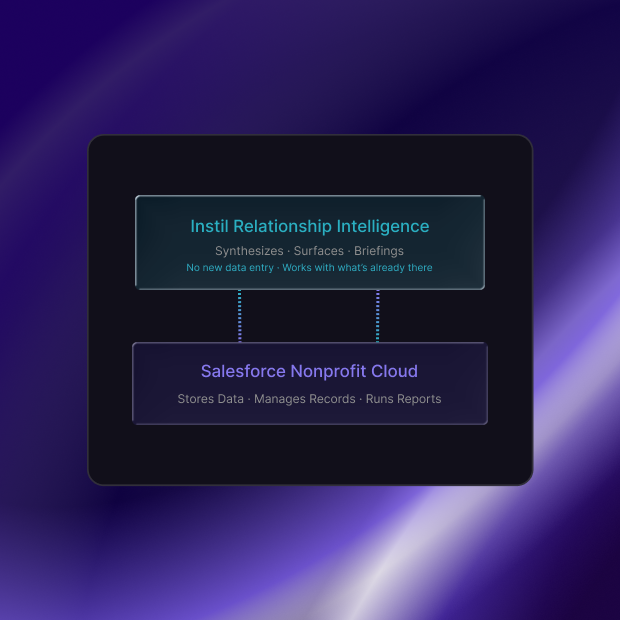
For teams where the gift officers are managing full portfolios and the reporting infrastructure isn't built yet, relationship intelligence platforms like Instil do this automatically, surfacing the leading indicators as a briefing before each interaction rather than requiring a separate reporting workflow.
LYBUNT doesn't go away in either scenario. It moves from being the early warning system to what it actually is: a record of outcomes. The early warning happens before anyone gets there.
Want to see what leading indicator reporting looks like in practice? We show teams on Salesforce and Blackbaud how Instil surfaces these signals before each call in 20 minutes.